
An Outstanding Way Group Exercise Masters Long-Term Blues

Three people at the beach doing 5-pointed star pose in yoga in article Tackling clinical depression using group exercise activities that benefit YOU and build accountability
In this article:

Whether a Corporate VP or a stay-at-home parent, use this constructive advice to pull yourself out of depression from this writer’s own experience

by Gwenn Jones, CPT

June 30, 2023; Updated February 5, 2026

Group fitness has flipped far away from the old 80s coddling of young skinnies in shiny tights. (Thank you.) Still thriving, today’s diversity in group fitness and empathetic coaching intelligently transform the physical and emotional well-being of today’s women. 

PART ONE 

Four decades of an unbroken love affair with group fitness have evolved into assorted styles to indulge all ages. What has not changed is that group fitness still turns exercise into some badass fun. The laughter is infectious. The airspace is non-punishing. And, without doubts, if you love it, you do it. 

Part of group exercise amazingness caters to those who don’t want to plan or think seriously about anything for an hour. Except to frolic and relish in our body’s capabilities. Group fitness inspires mental and physical discoveries. One is the dramatic mood enrichment, instrumental for many women (and men) who suffer from mild-to-moderate clinical depression.

Winning the enrichment is the focal point of this writing. Much of it taming my personal challenges. 

Our motivation to move forward is the tallest hurdle. It starts here.

The first sensible step is to nail down our elective motivators 

LACK OF MOTIVATION is a recurrent and overwhelming symptom of depression. This is my landmine, and it’s life-affecting. We all need a degree of motivation to initiate anything, whether heading to the grocery store or our job. These two I call survival motivators. In other words, we have to eat and we have to pay the rent to survive. We’re on mental auto-pay here, where the actual punch is the motivator. Let’s pluck the survival-ers for now. 

Other motivators that hiss at us are the elective motivators or our self-duties. These are bathing, laundry, oral hygiene, exercising, opening mail, etc. Our interest level is erratic. These electives take a face slap to perform for depressive brains. When accomplished, our consistency can be spotty.  

Exercise is an elective motivator

To activate our exercise motivator, we need to summon our mindset to become accountable. This accountability becomes our motivation. Easily said, but rather unnerving.

During depressive episodes, we experience a mental wrestling match to compel (elective) accountability. Its success relies on the sense of importance introduced in the fight. And “fight” is a perfect descriptor. Each elective motivator needs profound focus without a roaming mind. Again, easily said. Once you’ve conquered focus, your first step forward clocks in.

Here’s the example that worked for me almost every time:

Q: What’s the toughest part of going to your first group fitness class, or any class?

A: Leaving the house, right? (It was for me.)

Q: How did I motivate?

A: I put my workout wear on. That’s a huge push and not an original one. 

You’re accountable now, but not 100%.

Why not 100%? Because you have the choice to sit and think about it, to mind-roam. This is a moment, a hurdle. You have the choice to strip off your sweats and change your mind. Renewing that initial focus plays big here.

Q: How did I avoid changing my mind?

A: I didn’t the first time; I tried again.

To avoid changing my mind the second time, I dressed lightning fast. This pumped me up a bit. Very little time was available for my brain to be hijacked into surrendering to my recliner. 

Cook group exercise and social contact in the same pot

Whatever your exercise choice becomes, the benefits of a group fitness climate ease depression and anxiety immensely. Both exercise and social contact have proven pivotal in the prevention and treatment of many mental health disorders. Lack of social interaction leads us into withdrawal and loneliness. Whereas socialization provides comfort, compassion, and empathy. 

What you discover as the pot simmers…

Look over these amazing long-term effects showing how group exercise clobbers the solo road:
 
  • Your instructors are inspiring, dynamic, and sensitive
  • The high-powered music rocks (when appropriate)
  • The camaraderie is comforting
  • Occasional grunting? It’s hysterical 
  • Negative news is non-existent — you’re way too focused
  • Uplifting social connections come to light
  • The self-challenge becomes appealing and distracting
  • Negative stored energy is released; anxiety is reduced
  • Every class is a celebration

As a rule, we generally seek exercise to better our lifestyle, trim fat, improve sleep, and feel and look better. But to a greater extent, those who exercise and adhere to it value what they’ve become. Read that twice. Enter, self-confidence.

More motivational food for thought

Once you walk through the door of that exercise class, the mental work is your instructor’s job, not yours. Let everything go.

Group exercise is a serious motivator in itself

Why? You compound your new motivator with adherence. Because:

  • those around you know when you show up, and when you don’t — accountability 
  • those who work out in a group report better consistency — remember that word, adherence
  • others in the group see your progress, and you see theirs — confidence builds
  • greater success is reported from group exercise — success is what we want, right?

These are pretty brawny motivating factors. Pun intended. 

DEPRESSION IS SELF-ISOLATING. This isolation digs us into a deeper hole one day after the next. Commit and climb out of the hole by trying these suggestions. Expect some days to be better than others. Group workouts are a rich way to reach out to others, and they to you in a natural way. If you are the quiet type, fine. No discussion required. Just move your bod and enjoy the action.

Given the positive effects of exercising in a group, it seems simple enough to suggest signing up for a fitness class to anyone who can benefit from a shift in mood. But the ability to engage with a group can be a hurdle for individuals suffering from depression. The same goes for starting an exercise routine. Lack of motivation is common among people with a mood disorder. Given these challenges, setting modest exercise goals with as little as one extra person working out alongside is the perfect starting point. As confidence in the ability to exercise and interact with others grows, workout frequency and the number of fellow exercisers can gradually increase, which should result in less sadness, anxiety and overall depression.

See article by Jill Barker  •  Special to Montreal Gazette Publishing date: Sep 12, 2021,  https://montrealgazette.com/health/diet-fitness/fitness-having-a-workout-buddy-might-help-improve-your-mood

Now wait, group exercise doesn’t have to be grueling to ease depression

Group workouts have powerful effects on mental health challenges. Stress levels remarkably reduce as our spirits climb to unrivaled honey. And all physical activity is mood-enhancing. Whether a fanatic or subdued fitness participant, any form of exercise improves our outlook and energy. The proven scientific results are a better quality of life. 

Exercisers experience higher all-day energy, reduced stress, sharper memory power, boosted self-confidence, improved sleep, positive attitude, better bones, and a fitter physique.

When past solo attempts to better your mental health have been unsuccessful, I urge you to try a form of group exercise. You will make progress; you will transform.

Here are some unbeatable lures to chew on:

  • You’re never alone
  • Solid emotional support awaits 
  • Exercise time passes quickly
  • The gains are life-altering
  • The community connection is immediate
  • The mix of personalities is witty and educational
  • You are doing something meaningful for yourself and others like you

After your first class, you’re all fired up

It’s euphoria. Where self-confidence and sadness were buried deep in your soul, both now seem a bit lame. You are now self-assured. You are the master of you. Depression is a chasm you’ve climbed out of. One day is not a fix. But the road you are on offers you outstanding mental medicine. When you continue, your comfort continues.

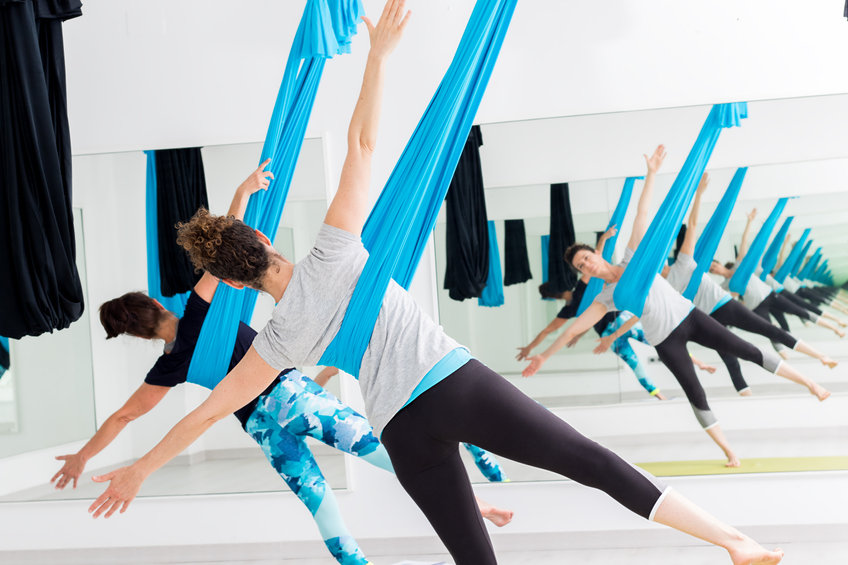
Your decision is major in the life-altering mix of social and health benefits. Soon, you will likely seek out more fitness class options, activities, or coaches that suit you best. One of those might be yoga practice.

Yoga significantly reduces depressive symptom severity

In 2021, yoga scored number one in fitness popularity — particularly for mid-age and senior women in the USA. With age, we develop some aches and pains therefore our joints respond better with a low-impact practice such as yoga.

The blessings of yoga practice are:

  • all our muscles are strengthened and stretched
  • the joint impact is minimal
  • the focus on the breath engages a simmering self-release 
  • we accept ourselves with pride
Yoga is breathtaking, and more. Here is just some information from many published studies:
 
    • Researchers at Boston University investigated whether yoga can reduce depressive symptoms, and how frequently yoga needs to be practiced in order to notice change in mood and symptoms. The study found that those who participated in yoga classes two to three times per week noticed significant reductions in depressive symptoms over a three month period. Even those who practiced less frequently saw meaningful improvement in symptoms (Streeter et al., Journal of Alternative and Complementary Medicine, 2017). 
    • More recent research confirms these benefits. A meta analysis conducted in 2023 reported that consistent yoga practice is associated with moderate to large reductions in depressive symptoms, which is comparable to outcomes in evidence-based behavioral treatment. These effects are the strongest when yoga is combined with mindfulness-based techniques and guided breathing strategies (Wu et al., Frontiers in Psychiatry, 2023).

(https://georgetownpsychology.com/study-shows-yoga-reduces-depressive-symptoms/)  

Long-awaited by us fitness trainers, contemporary physicians now surrender to, “Add yoga instead of drugs.” Note the word, contemporary.

Each time a newbie comes to my yoga studio referred by their physician, I dance in a delirious headspace. Not just a dance for the new student, but for one more open-minded medical professional who chose the latest science before, or concurrently with, medications (when applicable).

More onboarding group fitness winners are Barre, Pilates, Stretching, Spinning, Dance, group walking clubs, and are you ready? Pickleball.

As a trainer, my first recommendation is swimming for all-around, low-impact, all-muscle-inclusive exercise. However, pools are less accessible than the locales I mentioned. Still, when available, many community pools have group aqua classes. 

There is much diversity in our demographic areas to take advantage of. One option is a local recreation center if a fitness center or dedicated studio is unavailable.

Need an alternative? Take it outside

If a group atmosphere is not possible for you, step outdoors. Being outside in nature lowers tension and anxiety. Walk around the block. Walk your dog. Every day is a step forward. No gym required. A neighbor might even join you. Extend an invitation. Offer to walk their dog. 

Getting back to motivators, here’s a non-fitness motivator example:

Take advantage of what I call an organic motivator

Here’s an example. You are out running errands and bump into an acquaintance. During your chat she says, “Hey, you look great in green.” The compliment settles in sweetly. Later you will pluck that little party favor out of your brain, and I bet your next clothing purchase is green. (Maybe yoga clothes?) When you wear it, you’ll hold your head proudly. Voila! A perfect organic motivator and mood energizer. 

My organic motivator is fitness wear. Mind you, I still have challenging days. That said, every time I slip into new workoutwear, I’m pumped for the day. It works every time. 

group yoga fitness outdoors

The happy chemicals that hoist us up

Exercise sessions release particular chemicals from our brain and central nervous system. For example, the brisk walk, a yoga practice, a swim, or a bike ride. These natural brain chemicals are called “happy chemicals” or endorphins. Different exercise intensities release varying levels of endorphins. Different activities do as well, such as eating chocolate, laughing, or having sex. 

Endorphins are neurochemicals produced in the body in the pituitary gland in response to stress and pain, Dr. J. Kip Matthews, sports psychologist explains. In layman’s terms, they’re kind of like natural painkillers. They interact with opiate receptors in the body, which then minimizes our pain experience. (https://www.commencefitness.com/single-post/how-exercise-makes-us-happier) 

In a nutshell: They make you feel good!

The Takeaway

Society today has begun to respect mental health and its importance to us all. Depression is a force to be reckoned with and needs treatment. Some who suffer with mild-to-moderate depressive illness who commit to regular exercise require no medications.

Mental illness, no matter the degree, affects youth, adults, and the elderly for various reasons. Mental illness bears no bias against CEOs, food servers, nurses — anyone. It affects our marriages, friendships, jobs, nutrition, and physical well-being. 

Every worthwhile wellness organization advocates regular physical exercise as a stepping stone to treat depression. Why? Because it works and works long-term with consistency. But, once more, we must harness that accountability challenge.

It might take 3 or 4 tries to develop your mindset and nab your accountability marker. Be patient with yourself. Self-improvement and self-help are the goals. Not self-perfection.

PART TWO 

My story: How my first group fitness class went

Welcome to my beginning. It was a scary elective motivator that would inject me into a big building with strange people. It was 30 years ago and it was called, “aerobics.”

The concept was alien to me. 

The hour was a bit wild. My thought was it might be similar to my dance classes as a teen.

NOT . . .

The bass pounded, the movement was nonstop, and I went a bit left when cued right. I was less than masterful but, it was kickass fun. My brain and body partied with 25 other humans punching at air and grapevining in sync with top-20-radio-hit-somethings.

After class (and still standing), I was puffy-chested, to be honest. I was confident, positive, and the freakin’ boss of me. A fresh perspective took off like my spirit jumped a planet. I couldn’t wait ’til next time. I signed up for a season pass for two other classes and didn’t turn back. In no time, I made long-term fitness friends and stayed with that facility for years. 

Eventually the shiny tights lost steam and were easy to UNremember.

When mentally challenging days surfaced, I counted the days until class met again. The decision to join these classes wasn’t the cure-all for my blue days. Though far from perfect, it was life-altering, which led to another push.

Five years later I studied and became a group fitness trainer. I was intent on consistent physical fitness and determined to help others find a happier mindset.

Over to YOU. Your next accountability appointment starts here

And there WILL be one. To help create your next accountability, make yourself an appointment. It’s as simple as a sticky note on the bathroom mirror. I did this for years, and still do, when a new elective motivator enters my space. 

That new elective is my stranger danger. That would be a dinner party or some similar gathering.

So, outside of my training job, my survival motivator, I still have trouble leaving my house. Half the time, I decline invitations — electives. But the sticky stares me in the face morning after morning which guides me closer to leaving my comfort zone. 

Socializing is still a challenge. But when I push myself to attend, I’m always glad I went. 

So, make your sticky appointment. Find it on the bathroom mirror tomorrow morning, “Pickeball 3 PM,” or “Yoga, bring water.” Breathe big. Know this new day will turn up new acquaintances who will be lucky to know you. Your outlook moves one step closer to positive.

Let’s go, gals!

Need assistance? Contact me for a consult

An Aside, as a Personal Trainer:

Clients who struggle through damaging life events, including mild-to-moderate depression, often reach out to their coach with trust. They share their private stories. They express how exercise programs have freed them of the dark mindset. Through continuing education, certified fitness trainers have studied anxiety and depression more extensively in the past decade.  

Each client has different needs somewhat beyond physical exercise. As mentioned, motivation or self-confidence top those needs for many depression sufferers. Therefore, commending our fitness clients on his/her genuine accomplishments lifts them. These declarations resonate deeply as clients battle their constant self-analysis. In turn, the positive shines inward and outward. Deservedly so. 

Building palpable relationships with struggling clients takes solid on-the-job experience from a seasoned professional. At rare times an ombudsman role kicks in. 

MOREOVER, qualified fitness pros must recognize when a client might benefit from a more precise level of professional help. If the trusting client opens the door, discreetly recommending extra help is our responsibility (where appropriate and without judgment or diagnosis). 

We must contribute in all ways possible to better our clients’ physical and mental wellness. Thanks for reading.

—Gwenn

Lawrence Robinson, Jeanne Segal, Ph.D., and Melinda Smith, M.A., “What are the mental health benefits of exercise?” Helpguide.org,  https://www.helpguide.org/articles/healthy-living/the-mental-health-benefits-of-exercise.htm, updated November 14, 2022

Beth Daley, “Group exercise may be even better for you than solo workouts – here’s why.” Theconversation.com, December 29, 2020, https://theconversation.com/group-exercise-may-be-even-better-for-you-than-solo-workouts-heres-why-149348

Kelsey Graham, “Exercise to Reduce Symptoms of Anxiety and Depression,” AceFitness.org, August 29, 2017, https://www.acefitness.org/resources/everyone/blog/6537/exercise-to-reduce-symptoms-of-anxiety-and-depression/

Jill Barker, “Fitness: Having a workout buddy might help improve your mood.” Montrealgazette.com, September 12, 2021,  https://montrealgazette.com/health/diet-fitness/fitness-having-a-workout-buddy-might-help-improve-your-mood

Maria Cohut, Ph.D., fact checked by Jasmin Collier, Medical News Today: “What are the health benefits of being social?” Medicalnewstoday.com, February 23, 2018,  https://www.medicalnewstoday.com/articles/321019#Social-context-determines-healthful-habits

Kelly McGonigal, “Five Surprising Ways Exercise Changes Your Brain.” Greatergood.berkeley.edu, January 6, 2020, https://greatergood.berkeley.edu/article/itetm/five_surprising_ways_exercise_changes_your_brain

Emily Laurence, “Endorphins and Exercise: How Intense Does a Workout Have to Be for the ‘High’ to Kick in?” Wellandgood.com, July 27, 2018, https://www.wellandgood.com/endorphins-and-exercise/

Share this article →

Bio image of Gwenn Jones from YogaGrit.com
Article by:
Gwenn Jones, CPT CYT — Content writer in Wellness-Lifestyle-Fitness. Gwenn is a 25-year ACE-certified personal fitness trainer, yoga studio owner, instructor, and fitness consultant. Some of her features include Fit&Well, AskMen.com, Forbes, and EatThisNotThat!. She’s grateful to be a native Californian where happily home-based in the Sierra Nevada foothills.

More Greatness in Health & Lifestyle!

Scroll to Top