How to know if you are doing Forearm Plank correctly and what muscles forearm plank pose works
by Gwenn Jones, CPT
January 3, 2024; Updated May 30 , 2026
Any powerhouse in the land of functional exercise is mega-mighty to me, especially when it locks in results. As a certified personal trainer and functional training specialist, I shoot for the most inclusive, best time-sensitive, and high-results monster moves. A hero is the forearm plank.
The Forearm Plank (aka elbow plank) looks like a misfit maneuver. It begins on the floor, or mat, with belly down (prone). Well, maybe also DVR set, jammies swank, popcorn duly staged by dominant hand away from nosy dog. Start from hands and knees on all fours if you’re a beginner.
This no-wuss-exterminating-tiger-like move trains all your core muscles. From all abdominal muscles (transverse abdominis, rectus abdominis, and external and internal obliques)—to and through the shoulders (deltoids), back, arms, legs, and glutes—this intense and regal move is a lifer!
Engagement of all these stunning muscles in proper plank position improves our posture, protects our internal organs, and stabilizes our spine. The beauty of planks is they can be done anywhere, anytime, are low risk, and no equipment is necessary. Yahoo on that! No excuses.
Here’s how to do the forearm plank correctly
First, you must respect that quality in form over hold time is the priority. So if you hold the proper form (below) for only 5 seconds on your first try, don’t be surprised. It’s not uncommon. You will build up the hold duration over time.
Perform on a yoga mat, exercise mat, or your carpet (DVR thriller or comedy?):
- Take an all fours tabletop position (hands & knees); wrists aligned directly under your shoulders; knees directly below your hips
- Lower your elbows down to replace your aligned hand position: forearms planted, hands apart facing inward or down
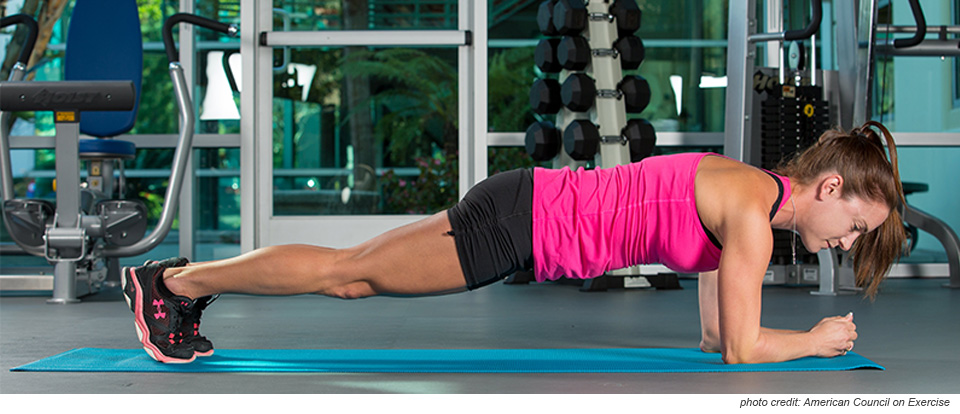
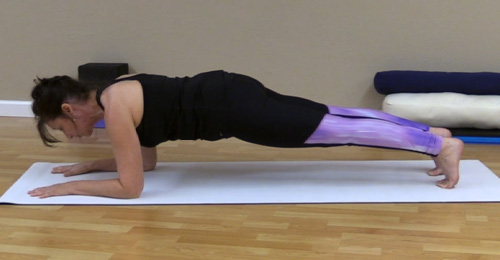
- Pull your abs in deep, stiffen your core and extend one leg at a time straight behind your hips, feet flexed hip-width apart, flexed toes on the mat, legs straight (see image below)
- Contract the glutes and quadriceps
- Forearms stay parallel with each other; shoulders broad (do not clasp hands together)
- Image examples below
Focus on these points for holding correct planking form
Pay attention to the proper plank technique shown below. Form is everything:
- Head/neck in alignment with the spine (i.e., no head drop)
- Encourage length in the back of neck; eyes look slightly in front of hands; shoulders lowered away from earlobes (i.e., no shoulder shrug or lifting)
- Hold your belly tight as the glutes and thighs fully engage (think tension)
- Keep your back in neutral alignment
- Keep abs, glutes, quads engaged; feet flexed and perpendicular to the ground
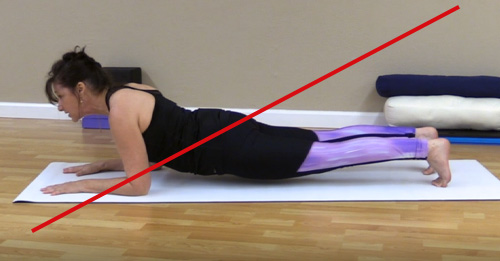
- Keep hips high enough to NOT sag below chest level (square hips should be about level with upper back) as in the image at Left
How long should you hold a forearm plank?
Forget “should.” Hold as long as you can (15 seconds, 30 seconds — but not to “failure,” only to muscle fatigue). Better yet, count breaths instead as we do in yoga class. Breathe slowly and consistently (inhale through the nose, exhale softly through the mouth if possible).
Rest and repeat 3-4 times. Planks can be done 3 times per week, or every other day. If you get to a 60-second hold, that’s excellent.
What are some plank modifications?
More Intensity: Pull flexed feet together for more intensity and tuck your tail a little. Lift one leg a few inches off the floor, keeping the lifted leg straight and engaged. Hips remain level; pause, and switch to the other leg. We’re really rockin’ hard with this one.
Less Intensity: Spread flexed feet shoulder-width apart (or wider) for more ease. Ensure all muscles remain engaged.
Lesser Intensity: If you’re trembling, lower your knees to the mat, rest, and try again with knees angled behind the hips. You will eventually build up to a longer hold, then a straight-leg hold.
What muscles do forearm planks work?
When done correctly, forearm planks target our core entirety i.e., the transverse (transversus abdominis), the rectus abdominis, and the internal and external obliques. Plus the upper back shoulders, back, arms, legs, and glutes.
The most dominant muscles that power through the hold are the transverse and rectus abdominus.
Now ya know…
The forearm plank builds a strong and stable core that assists with daily activities. Plank pose builds balance and coordination for better body function, strengthens your legs, supports your low back, and strengthens the entire upper body, which delivers better posture. Another plus, planks are great feet fortifiers.
Like I said, forearm plank is a “lifer.” Ok, now have a plankin’ good workout and pass the popcorn—buttered!
Amber Sayer, August 2022, The Core Benefits of Planking, https://www.livescience.com/plank-exercise-how-the-popular-exercise-changes-your-body
February 9, 2022, 7 Benefits of Plank Exercises, https://gymnation.com/blogs/7-benefits-of-plank-exercises/