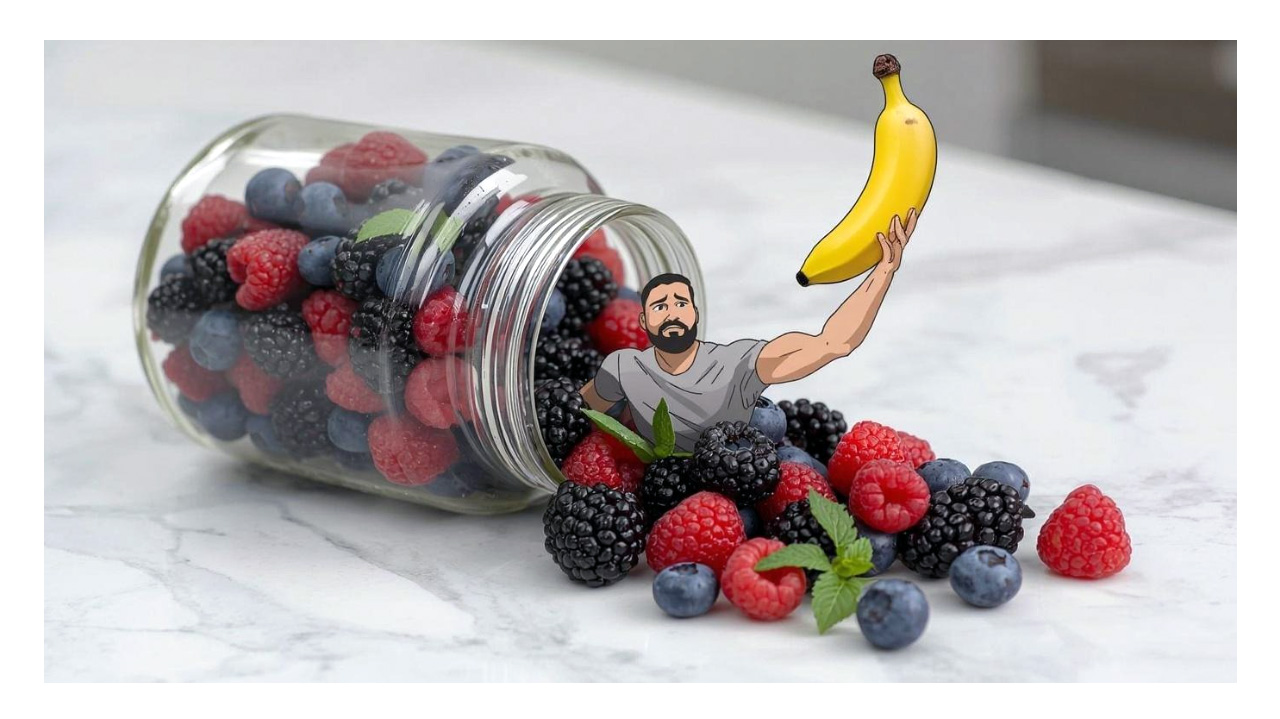
Bananas in your smoothie slash nutrient absorption like a charging bull. Here’s why you should hit your rewind button before your next blend-y
As a personal trainer, eating healthy is not a painful stretch. But after years of devotion to my berry-veggie smoothies, my taste buds screamed for some negotiation. I aimed for a healthy, chocolate-y blend and hunted for online recipes.
Several cacao powder cocktails found their way to me. Most emerged with bananas for their “creamy, sweet texture,” especially complementing fruit blends. Now, guns are loaded. Wrong.
Vetting ingredient combinations is important, but often folks omit this part. My thought is that food intelligence ranks almost as high as that of medicine or vitamin interactions.
But first, I chose high-ranking global health publications for healthy smoothie recipes and sifted through tons of results.
Then I dug into the research (as we writers do) to uncover the science for my planned cacao blend. That’s when I landed on some big mischief from an interloper, the banana.
It turns out multiple studies showed my planned cacao/banana blend was self-destructing. Such that 84% of the nourishment I would expect is killed off. Not only that, common berry-banana blends scored the same fright.
I was surprised at how many distinguished health magazines turned up berry smoothie recipes mixed with bananas. Many produced by dieticians. (Respectfully, my guess is taste was a priority consideration for their readership at the time.)
Studies show why you should avoid mixing bananas with berries and cacao
Here’s why to avoid the bananas on this go-around. Scientific studies warn us about even one lone banana when we’re fruiting up.
First, here’s what we’re doing well in the berry power mix.
Berries in smoothies specifically reward us with vital flavanols. These are known antioxidants and anti-inflammatories that support brain and heart health. Leading the flavanol fruit team are:
-
- Blueberries
- Raspberries
- Blackberries
- Cranberries
No smoothie leaves my kitchen without the first two along with frozen kale.
What are Flavanols, and what are they good for?
The natural health benefits of flavanols range from:
-
- improved brain health (learning, function, reasoning, movement)
- positive cardiovascular health (improved blood flow, lowered blood pressure, reduced inflammation)
- gut health regulation (immune system)
Flavanols (under the flavonoid umbrella) are compounds derived from plant-based foods that contain polyphenols, which are powerful antioxidants. High-scoring flavanol-rich foods are:
-
- Vegetables: kale, spinach, and broccoli
- Fruits: blueberries, blackberries, apples, and more
- Others: cacao, black and green teas
Where do bananas come in?
Bananas are indeed a superfood providing electrolytes (potassium), fiber, and are a great workout snack (before and after). But, it turns out that for berry, cacao, and the other ingredients above, a single banana reduces their health benefits (i.e., nutrient absorption of flavanols) by 84%.
That’s a colossal waste of the critical nutrients we aim to consume in the first place. Add that bad dream to our time, energy, and grocery money going poof!
Here’s how bananas block flavanol absorption from berries
Bananas, on their own, are superfoods. This insight pertains to blending with specific foods.
Bananas contain an enzyme called polyphenol oxidase (PPO). This is the same enzyme that causes certain fruits and vegetables to turn brown. PPO is released when bananas are mixed with berries or cacao, as well as the foods mentioned above. This action quickly breaks down beneficial flavanols and reduces nutrient absorption (by 84%).
So, it’s best to avoid the berry-banana mix or the cacao-banana combo. Save the bananas for a separate treat.
But here’s more insight.
What other flavanol-rich foods are negatively affected by banana blends?
Other flavanol-rich foods advised not to blend with bananas are:
- Cocoa/cacao
- Grapes
- Pears
- Teas
Bananas aren’t bad food
Remember, I’m referring to smoothie blends here. Bananas on their own offer potassium, magnesium, vitamins B and C, and fiber. A large banana has about 120 calories and 420-490 milligrams of potassium. They are delicious for dessert or on top of oatmeal, cereal, yogurt, and fruit salads.
Banana smoothies are still healthy hulks. Mix them with compatible ingredients for nutritional benefits (see those below).
Circling back to my chocolate-y smoothie craving. To adjust, I used plain Greek yogurt (for creaminess and taste), soaked oatmeal (for fiber), soy milk, and cacao powder. Problem solved for a scrumptious, healthy shake.
To achieve that milkshake smoothness in my berry smoothies, I also add two tablespoons of plain Greek yogurt. Plus a teaspoon of maple syrup or honey for sweetness.
Other creamy additions that do not break down flavanols in a berry smoothie are:
- Tofu
- Avocado
- Mangos
What foods are best to blend with bananas?
Some healthy nutrient pairings for banana smoothies are:
- Oranges, mangos
- Greek yogurt
- Nut butters
- Kiwi
A simple fix for what was broken
Avoid the combat of one superfood spoiling another. Even the most delicious, healthy mixes need worthiness. My example of switching out the banana for the yogurt was an easy fix to engineer the best health benefits. Why destroy our efforts?
It pays to investigate a little to gain big.
Any suggestions to add?

Dobbyn, Tiffany, UC Davis, “You might be making this one mistake with your smoothie.” September 7, 2023, https://www.universityofcalifornia.edu/news/you-might-be-making-one-mistake-your-smoothie
Leasca, Stacey, “Bananas Could Be Wrecking Your Smoothie’s Superpowers, Study Suggests.” May 15, 2025, https://www.foodandwine.com/bananas-in-smoothies-decreased-nutrient-absorption-11734982